 Virtual Tour






Corrosion Protection – Fouling Control – Comparison of Epoxy, PU, and Modified Polyurea
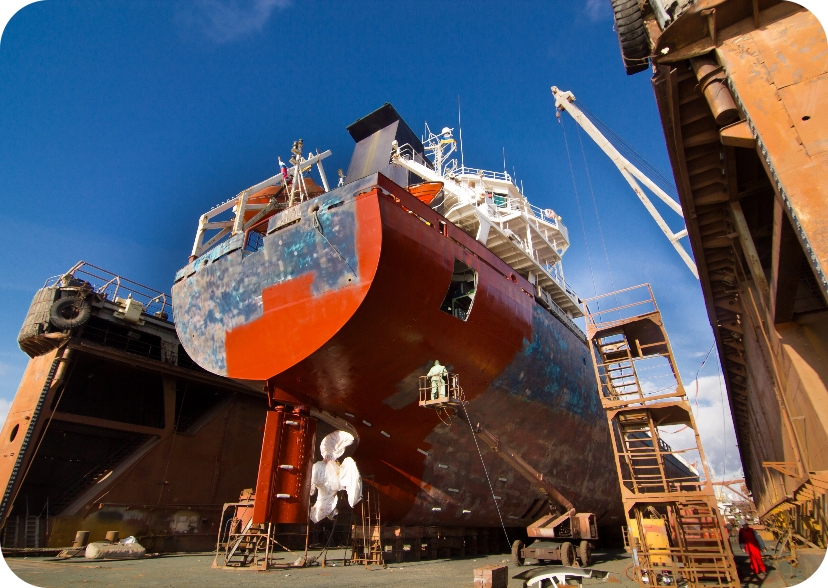
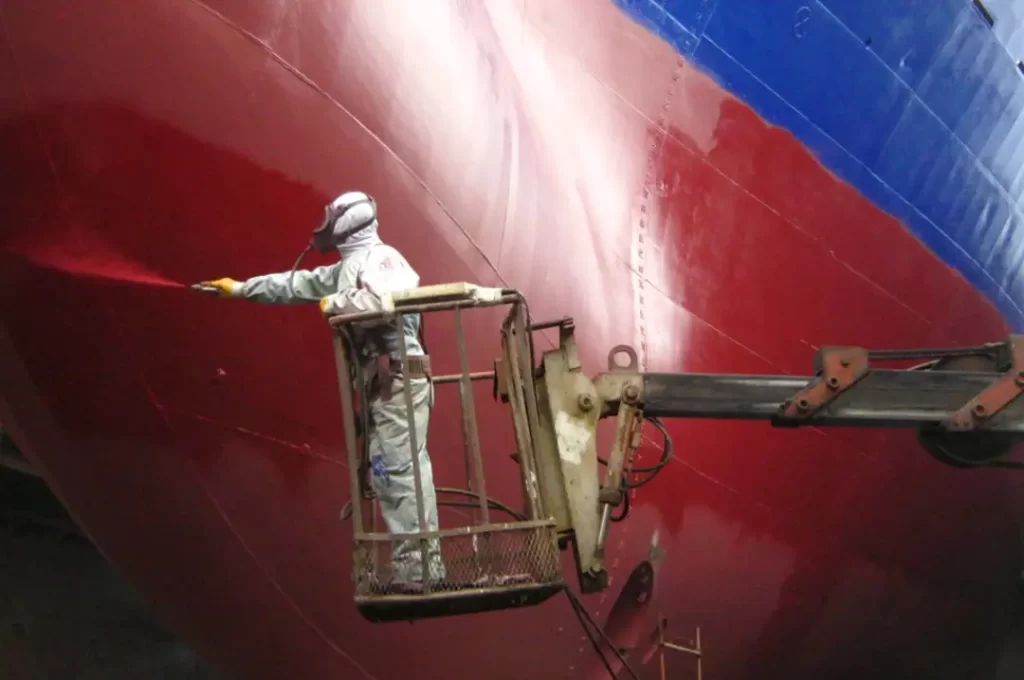
In the modern maritime industry, coatings are not only aesthetically pleasing but also play a strategic protective role, determining the lifespan of steel structures, fuel efficiency, and overall ship operating costs.
Especially for ships navigating diverse seas such as the South China Sea, Indian Ocean, Mediterranean Sea, or North Sea, the coating system must adapt to constantly varying corrosive environments in terms of temperature, salinity, marine life, and hydrodynamic conditions.
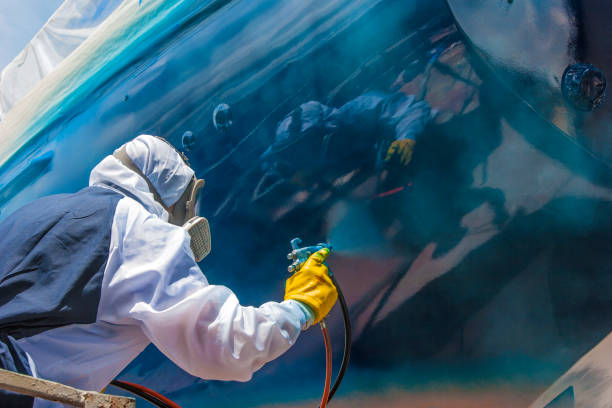
Multi-zone Marine Environment – Harsh Combined Corrosion Systems
Seawater is a highly electrochemically corrosive environment due to its high content of Cl⁻ ions, dissolved oxygen, and biological contaminants. When ships operate in seawater, the coating is subjected to:
- Continuous thermal cycling
- Abrasion from waves and suspended sand
- High-speed hydrodynamic pressure
- Variations in marine life density
Environmental changes cause stress in the paint film to increase over time, leading to microcracks and reduced adhesion if the material is not sufficiently elastic.
Mechanisms of Paint Degradation in Seawater Environments
Electrochemical Corrosion Undercoating
When the paint layer has micropores or localized adhesion loss, seawater penetrates the steel surface. Cl⁻ ions break down the natural protective oxide layer, activating anodic-cathode reactions, leading to widespread rust underfilm corrosion.
Osmotic Blistering
If dissolved impurities are present within the paint layer, the difference in salt concentration between seawater and the coating will create osmotic pressure, drawing water into the paint layer and forming blisters.
Hydrodynamic Abrasion and Cavitation
In the ship’s bottom and propeller area, high-speed currents cause mechanical erosion. If the coating is brittle or lacks impact resistance, its lifespan will decrease rapidly.
Biofouling – Economic and Environmental Challenges
Fouling forms in four stages:
- Biobacterial biofilms
- Microalgae
- Marine larvae
- Bom and hard-shelled organisms
As the hull roughness increases, hydrodynamic drag increases exponentially, leading to:
- Increased fuel consumption by 5–30%
- Reduced fishing speed
- Increased CO₂ emissions
- Increased mooring and cleaning costs
In the context of emission reduction requirements according to International Maritime Organization (IMO) standards, fouling control becomes a strategic factor in coating system design.
Comparison of Marine Epoxy – Polyurethane – Modified Polyurea
| Criteria | Marine Epoxy | Polyurethane (PU) | Modified Polyurea |
|---|---|---|---|
| Curing Mechanism | Epoxy-amine reaction | Isocyanate-polyol reaction | High-speed isocyanate-amine reaction |
| Steel adhesion | Very high | High | Very high |
| Water permeability | Low | Medium-low | Very low |
| Elasticity | Low – tends to be brittle when thick | Medium | Very high (high elongation) |
| Crack coverage capability | Limited | Good | Very Good |
| UV resistance | Poor – requires a topcoat | Good | Varies depending on the system – usually requires a UV protection layer |
| Hydrodynamic abrasion resistance | Medium | Good | Very good |
| Construction speed | Medium | Medium | Very fast – cures instantly. |
| Typical role | Anti-corrosion primer | Topcoat for aesthetic and UV protection | High-performance elastic layer / hybrid system |
Optimal Multi-Layer Coating System Configuration for Multi-Sea Vessels
An effective protection system typically includes:
- Surface preparation meeting SA 2.5 standards
- Electrochemical corrosion-resistant epoxy primer
- Reinforcement intermediate layer
- High-performance elastic layer (modified polyurea)
- Specialized anti-fouling layer (SPC or silicone)
The multi-layer structure simultaneously addresses:
- Electrochemical corrosion due to Cl⁻ ions
- Microcracking due to thermal cycles
- Hydrodynamic abrasion
- Biological fouling
- Optimized fuel efficiency
Conclusion
In the context of vessels operating across diverse sea conditions with complex temperature, salinity, and biological variations, the coating system cannot rely on a single material.
Epoxy provides the role of substrate corrosion protection, PU provides UV protection and aesthetics, while modified polyurea offers superior elasticity, waterproofing, and mechanical durability. When properly configured, the coating system becomes a strategic line of defense protecting steel structures and optimizing long-term operating costs.
With experience in high-performance protective materials, NEWTEC GROUP provides technical coating and paint solutions for ship hulls, meeting the requirements for operation in harsh saltwater environments and diverse operating conditions.
Solutions include high-strength anti-corrosion coating systems for steel substrates, elastic waterproof and seawater-resistant coatings, configurations to enhance abrasion and impact resistance, as well as combined coating systems to optimize operational efficiency and reduce maintenance cycles.
With a focus on material quality, strict control of the application process, and long-term protection effectiveness, NEWTEC GROUP aims to provide ship hull protection systems capable of adapting to complex variations in temperature, salinity, and hydrodynamic pressure, contributing to extending the lifespan of steel structures and optimizing operating costs throughout the ship’s lifecycle.
 Virtual Tour


You may also be interested in
MARINE COATING SYSTEM FOR SHIPS OPERATING ACROSS SEA REGIONS
Corrosion Protection – Fouling Control – Comparison of Epoxy, PU, and Modified Polyurea In the
Mar
Newtec Group appoints Deputy General Director, enhancing management capabilities
On the morning of February 2nd, amidst the joyful and enthusiastic atmosphere of welcoming the
Mar
Newtec Group joins hands with the “Tet for the Poor – Winter for Children 2026” program in Nghe An
On January 29th, Mr. Mach Tho Cuong, representing Newtec Group Joint Stock Company, was present
Mar
WATERPROOFING AND CORROSION PROTECTION FOR THE ENERGY INDUSTRY
1. General context: As energy infrastructure faces the challenges of time. For over a century
Jan
HOT OR COLD POLYUREA?
Polyurea is becoming a strategic coating material in infrastructure, heavy industry, and civil engineering projects due to its
Dec
NEWTEC GROUP’S MARK AT VINA COATINGS 2025
At the Vina Coatings 2025 International Exhibition , Newtec Group made a strong impression with a series of groundbreaking
Dec
NEWTEC GROUP PARTICIPATED IN VINA COATINGS FAIR HO CHI MINH CITY 2025
Newtec Group is pleased to announce that it will participate in the International Paint and Coating
Nov
NEWTEC GROUP welcomes leading experts in construction materials at VIETBUILD 2025
Newtec Group is honored to welcome leading experts in the construction materials industry at the company’s
Oct