 Virtual Tour





1. General context: As energy infrastructure faces the challenges of time.
For over a century of industrial development, energy sectors such as electricity, coal, oil and gas, renewable energy, and nuclear energy have consistently been considered the “backbone” of the national economy. The infrastructure of these sectors – from power plants, coal-fired power plants, hydroelectric power plants, oil and gas pipelines, fuel storage facilities, substations, to underground and offshore structures – all share common characteristics: large scale, continuous operation, absolute safety requirements, and long lifespan .
However, these very characteristics also expose energy projects to a silent but extremely dangerous enemy: water and corrosion . Waterproofing and corrosion protection are not just auxiliary technical aspects, but have become vital factors determining the durability, safety, and economic efficiency of the entire project.
In reality, many serious incidents in the energy industry – leaks, structural damage, power reduction, and even accidents – originate from water ingress, chemical contamination, and material corrosion . This highlights the urgent need for advanced, research-based, and proven waterproofing and corrosion-resistant solutions , rather than traditional materials or short-term, stopgap measures.

2. Corrosion and water infiltration – the biggest “destroyers” of energy infrastructure.
2.1. Corrosion in the energy industry environment
Corrosion is the process of material destruction due to chemical, electrochemical, or mechanical-chemical reactions with the surrounding environment. In the energy sector, the level of corrosion is often much more severe than in typical civil engineering projects, due to:
- Strong chemical environments : acids, alkalis, salts, seawater, H₂S gas, CO₂, petroleum, industrial solvents.
- High and fluctuating temperatures : especially in thermal power plants, petrochemical plants, furnace areas, and steam pipelines.
- High humidity, prolonged flooding : hydroelectric power plants, underground structures, reservoirs, tunnels, deep foundations.
- Continuous mechanical loads and vibrations : turbines, generators, pipelines, coal conveyors.
Without proper protection, steel will rust, concrete will carbonize, reinforcing steel will weaken, and the protective coating will peel off, leading to a rapid decline in the load-bearing capacity and safety of the structure .
2.2. Water seepage – the source of many serious damages.

Water not only causes simple seepage but also acts as an activator and accelerates the corrosion process . When water penetrates concrete, it carries chloride ions, sulfates, and other impurities, increasing the rate of destruction of reinforcing steel and the structure.
For energy facilities, the consequences of water infiltration can include:
- Damage to water tanks, treatment tanks, and chemical tanks.
- Leaks at pipes, joints, and expansion joints.
- Corrosion of the factory’s foundation and underground structure.
- Reduced operational efficiency, increased maintenance costs.
- Increased safety risks, particularly in the power and oil and gas industries.
Therefore, waterproofing and corrosion protection must be considered a comprehensive, integrated, and long-term solution , and cannot be treated separately or superficially.
3. Specific requirements for waterproofing and corrosion protection solutions in the energy industry.
Unlike civil engineering projects, material solutions for the energy industry must meet stringent criteria:
- Long-term durability : The design lifespan is typically 20–50 years, or even longer.
- Superior chemical resistance : Withstands acidic, alkaline, salt, oil, and corrosive gas environments.
- Abrasion and impact resistant : Suitable for areas with flowing water, sand, mud, and solid materials.
- High adhesion on a wide range of substrates: concrete, steel, metal, composites.
- Ability to work in harsh conditions : high temperatures, high humidity, underground or outdoor environments.
- Safe and environmentally friendly : especially for clean water reservoirs, power plants, and residential areas.
These requirements render traditional materials such as bitumen paint, waterproof cement mortar, and conventional epoxy paints insufficient for many critical applications in the modern energy industry.
4. High-quality materials – an inevitable trend in waterproofing and corrosion resistance.
4.1. Polyurea – a breakthrough solution for energy buildings.
Over the past two decades, polyurea has been considered one of the most advanced waterproofing and corrosion-resistant materials in the world, particularly suitable for heavy industries and the energy sector.

The outstanding advantages of Polyurea:
- It cures extremely quickly , creating a seamless, jointless film.
- High elasticity and superior crack-bridging capabilities.
- Absolutely waterproof , even under conditions of continuous submersion.
- Excellent chemical resistance, corrosion resistance, and abrasion resistance .
- It adheres strongly to concrete and metal when the surface is properly prepared.
- Long lifespan , minimizing maintenance costs throughout the building’s lifecycle.
Because of these properties, polyurea is increasingly being used in:
- Power plants, hydroelectric power plants, thermal power plants.
- Water tanks, treatment tanks, chemical tanks.
- Pipelines, prestressed concrete pipes.
- Underground structures, tunnels, deep foundations.
- Steel structures in highly corrosive environments.
4.2. Other high-end materials in the overall solution system
Besides Polyurea, many other high-grade materials also play an important role in energy building protection systems:
- Polyurethane (PU) : flexible, elastic, suitable for waterproofing roofs , expansion joints, and areas subject to deformation.
- Industrial epoxy : chemical corrosion resistance, protection of steel and concrete structures in controlled environments.
- Polyaspartic acid : fast curing, flexible application, suitable for renovation and repair.
- Modified acrylic, silicone, and ceramic coatings : for specific requirements regarding heat, UV, and chemicals.
The key lies not only in the individual materials themselves, but in the ability to design a comprehensive solution , combining the right materials in the right place under the right operating conditions.
5. NEWTEC GROUP – expertise in mastering high-tech materials and solutions.
In this context, NEWTEC GROUP has gradually affirmed its position as a leading unit in researching, manufacturing, and providing high-end waterproofing and anti-corrosion solutions for key industrial and infrastructure projects in Vietnam.

With over 15 years of establishment and development, NEWTEC GROUP is not just limited to its trading role, but focuses on:
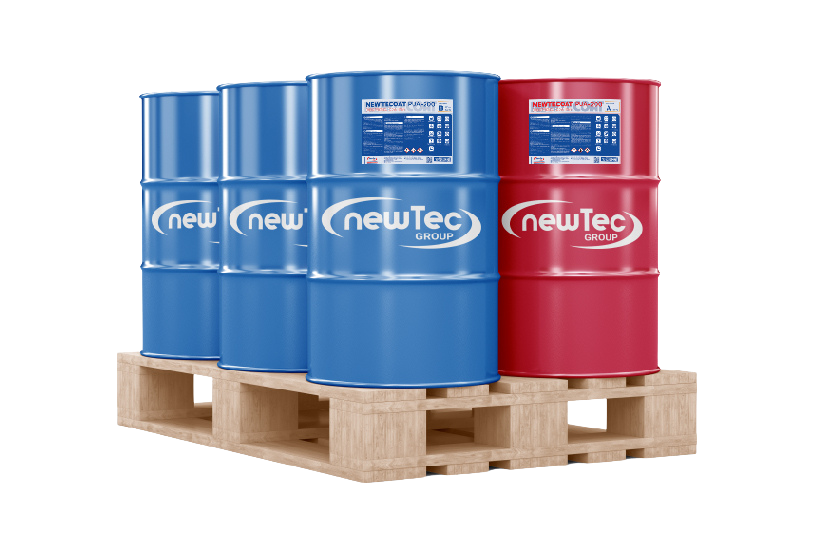
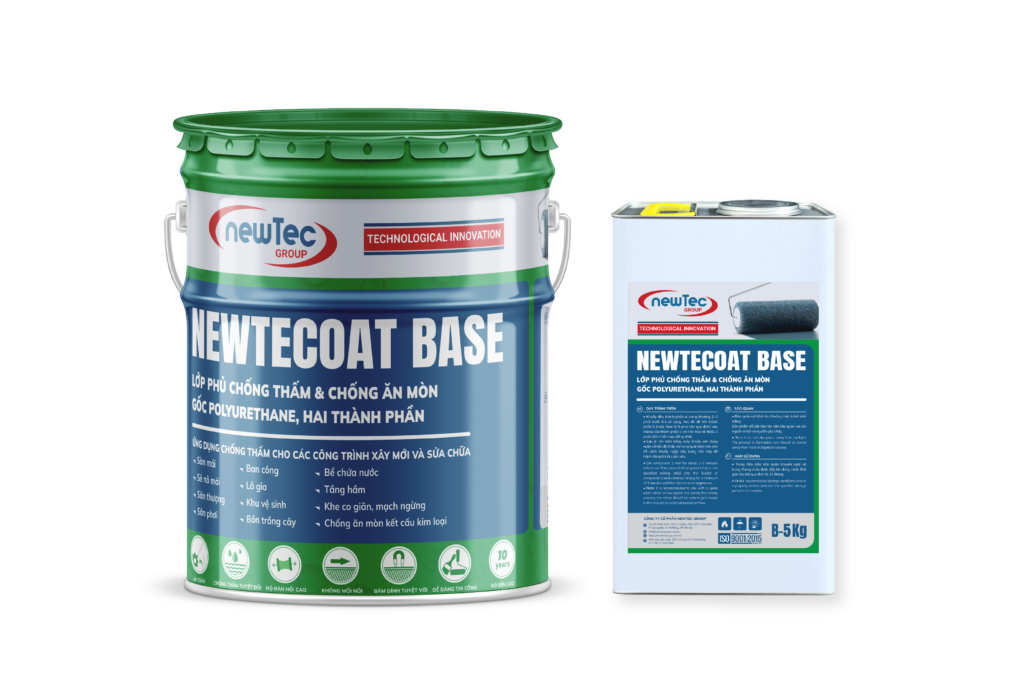
- Research and master the technology of Polyurea, Polyurethane, Epoxy, Polyaspartic acid-based materials…
- Producing materials suitable for Vietnam’s climate and environmental conditions .
- We provide a complete solution package , from technical consulting and supply of materials and equipment to construction and technology transfer.
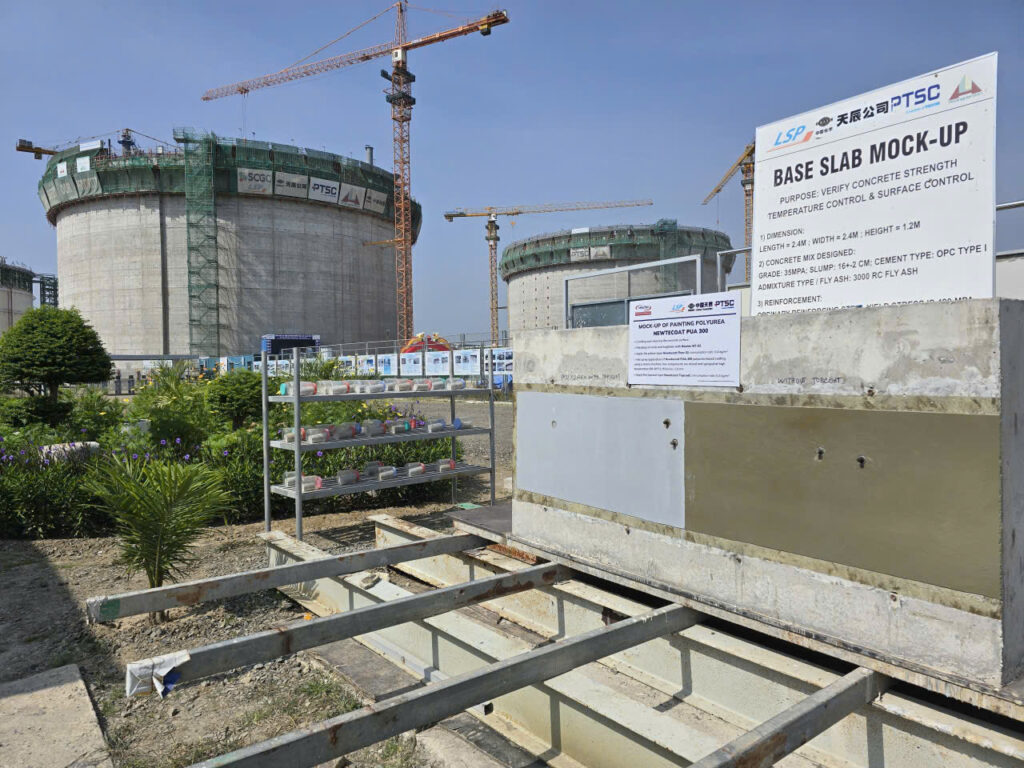
Practical experience gained from implementing numerous large-scale projects in the water, energy, and heavy industry sectors has enabled NEWTEC GROUP to accumulate valuable real-world experience , thereby perfecting a long-term and sustainable waterproofing and corrosion protection solution system.
6. Applications in key energy sectors
6.1. Electricity and Hydropower Sector
In power and hydroelectric plants, waterproofing and corrosion protection are applied to:
- Water tunnels, spiral chambers, pressure pipes.
- Settling tanks, pressure regulating tanks, underground structures.
- Floors, foundations, and areas that are frequently damp.
The use of polyurea materials and high-quality coatings helps extend the lifespan of structures, reduce the risk of failure, and ensure stable long-term operation .
6.2. Coal and coal-fired power industry
Coal-fired power plant environments are highly corrosive due to fly ash, wastewater, and treatment chemicals. Areas such as:
- Wastewater storage tanks, ash and slag tanks.
- Warehouse floor, conveyor belts, steel structure.
This requires coatings with strong abrasion and chemical resistance , where high-grade materials demonstrate superior advantages.
6.3. Oil and gas and petrochemical industry
This is a field with the most stringent requirements for safety and durability. Piping systems, tanks, and outdoor and offshore steel structures require long-lasting corrosion protection and resistance to chemicals and harsh weather conditions .
6.4. Renewable energy and nuclear energy
With the trend toward sustainable development, renewable and nuclear energy projects place increasing emphasis on durability, safety, and long-term risk control . High-quality materials are not just an option, but a mandatory requirement .
7. Waterproofing and corrosion protection: a one-time investment for long-term value.
One common mistake is viewing waterproofing and corrosion protection as an expense to be cut. In reality, investing correctly from the start with high-quality materials and solutions will:
- Significantly reduce repair and maintenance costs.
- Minimize operational disruptions.
- Enhance the safety and credibility of the project.
- Increase the lifespan and value of the structure.
For the energy sector, where every hour of downtime results in significant losses, the lifecycle efficiency of a project is far more important than the initial cost.
8. Conclusion
In the context of the increasingly developing and demanding energy industries, waterproofing and corrosion protection are no longer secondary considerations, but fundamental to sustainability . Choosing the right materials, the right technology, and the right partner with the expertise to master the solution is a key factor determining the long-term success of the project.
With a focus on research, production, and application of high-end materials, and experience in implementing numerous large-scale projects, NEWTEC GROUP aims to be a reliable technology partner , accompanying investors in the energy sector, contributing to raising the quality of Vietnam’s industrial infrastructure and bringing it closer to international standards.
 Virtual Tour


You may also be interested in
MARINE COATING SYSTEM FOR SHIPS OPERATING ACROSS SEA REGIONS
Corrosion Protection – Fouling Control – Comparison of Epoxy, PU, and Modified Polyurea In the
Mar
Newtec Group appoints Deputy General Director, enhancing management capabilities
On the morning of February 2nd, amidst the joyful and enthusiastic atmosphere of welcoming the
Mar
Newtec Group joins hands with the “Tet for the Poor – Winter for Children 2026” program in Nghe An
On January 29th, Mr. Mach Tho Cuong, representing Newtec Group Joint Stock Company, was present
Mar
WATERPROOFING AND CORROSION PROTECTION FOR THE ENERGY INDUSTRY
1. General context: As energy infrastructure faces the challenges of time. For over a century
Jan
HOT OR COLD POLYUREA?
Polyurea is becoming a strategic coating material in infrastructure, heavy industry, and civil engineering projects due to its
Dec
NEWTEC GROUP’S MARK AT VINA COATINGS 2025
At the Vina Coatings 2025 International Exhibition , Newtec Group made a strong impression with a series of groundbreaking
Dec
NEWTEC GROUP PARTICIPATED IN VINA COATINGS FAIR HO CHI MINH CITY 2025
Newtec Group is pleased to announce that it will participate in the International Paint and Coating
Nov
NEWTEC GROUP welcomes leading experts in construction materials at VIETBUILD 2025
Newtec Group is honored to welcome leading experts in the construction materials industry at the company’s
Oct